Restoring residential purpose to Frank Furness’s Dr. Caspar Wister House, a once-iconic residence that has been significantly altered by decades of commercial use and renovations.
With an abundance of iconic structures still standing to this day and scattered throughout the city of Philadelphia and its surrounding areas, Frank Furness needs little to no introduction. The legendary Victorian-era architect has undoubtedly left his mark and shaped Philadelphia’s cityscape, from religious and institutional buildings to a wide variety of residential structures. Detailed ornamentation and use of bold patterns and rhythms to break planes across facades make Furness buildings some of the most easily identifiable structures, even to the untrained eye. This is what makes the renovation of the Dr. Caspar Wister House so unique.
Originally acquired by Dr. Caspar Wister in early 1883, the property located at 1322 Locust Street would soon become the home for Dr. Wister and his new wife, Annis Lee, sister of Frank Furness. Embracing the spirit of the city’s Brotherly Love, Furness designed a residence at the property for his sister and Wister, built in 1884.
However, the couple would not occupy the residence long, as Furness would be called back for a renovation by a new owner in 1903. The City of Philadelphia Department of Records photo archives show that the building was up for sale again in 1927 at which point the front façade of the building remained unchanged from its original state. At some point between 1927 and 1955, the building underwent a significant renovation which involved lowering of the first floor, resulting in a major alteration of the exterior at the lower level. New window openings were created, along with new entrances flush with the sidewalk in various locations, most notably the main door at the chamfered corner. Zoning records and photo archives indicate the building was mixed-use with tenants including a bar/restaurant, a theatrical agency, and multiple apartments. In the late 1960s, the first floor space was occupied by a dry cleaning business and would remain as such until this most recent renovation.
The renovations that occurred between 1927 and 1955 left the building almost unrecognizable from its original design. When our project began, it was a hybrid collage-like structure with recognizable Furness moments at the upper floors. Although our project scope involved mostly interior renovations at the first floor, we worked closely with the Philadelphia Historical Commission to ensure any exterior improvements respected the existing architectural language. This involved enclosing the chamfered corner and coordinating with Pella and PHC to ensure the new window configurations, trim, and molding profiles matched the intent of the existing design.
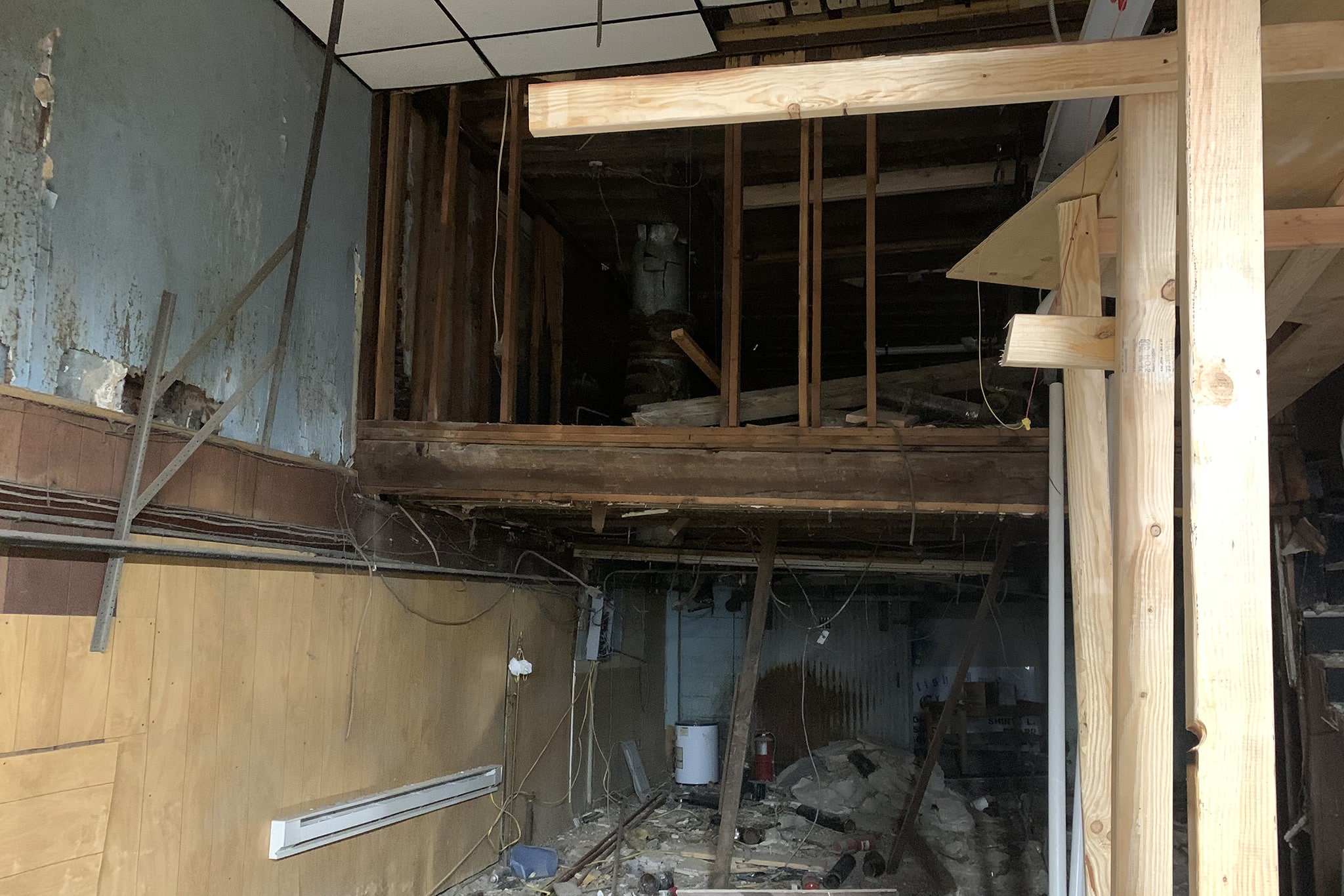
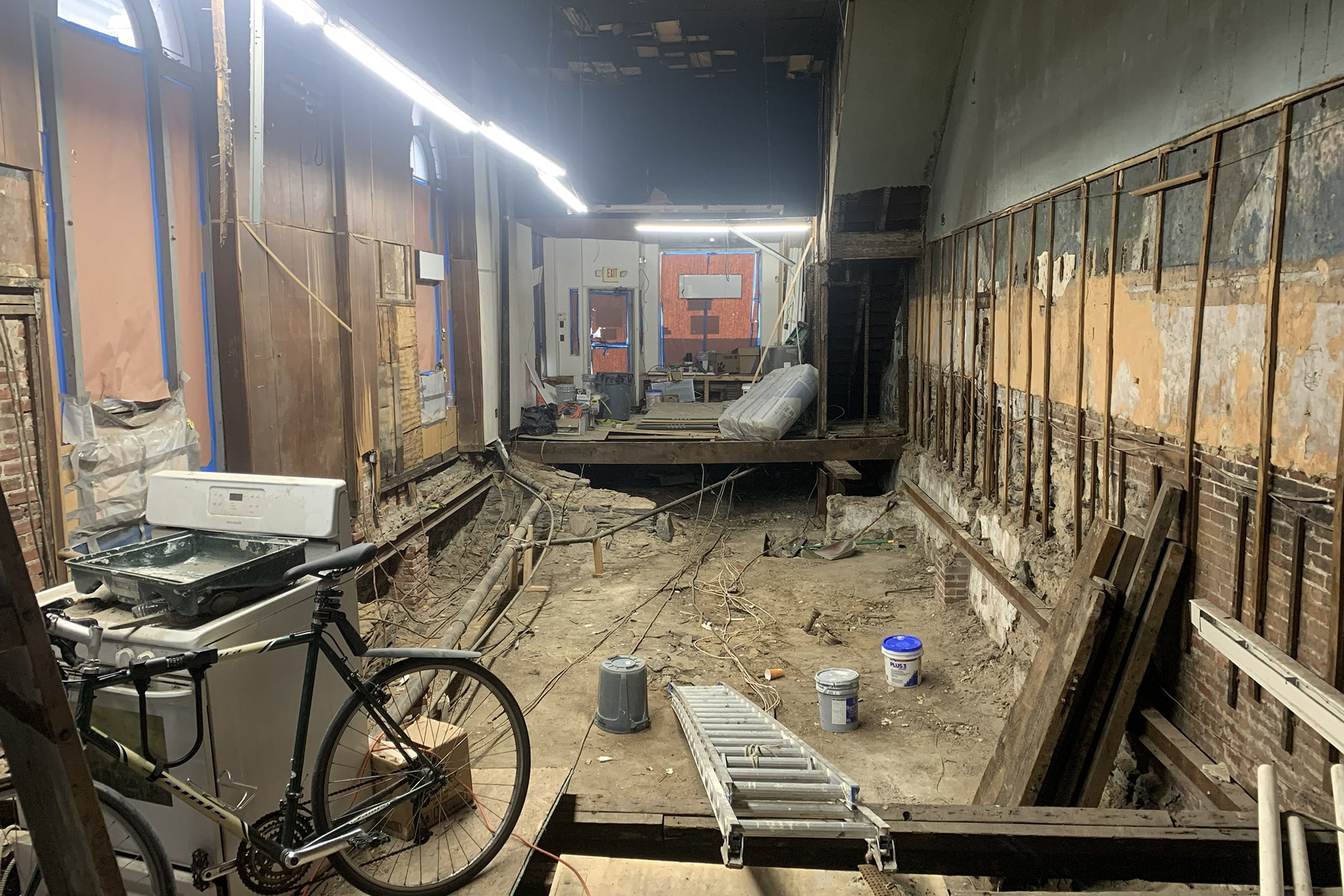
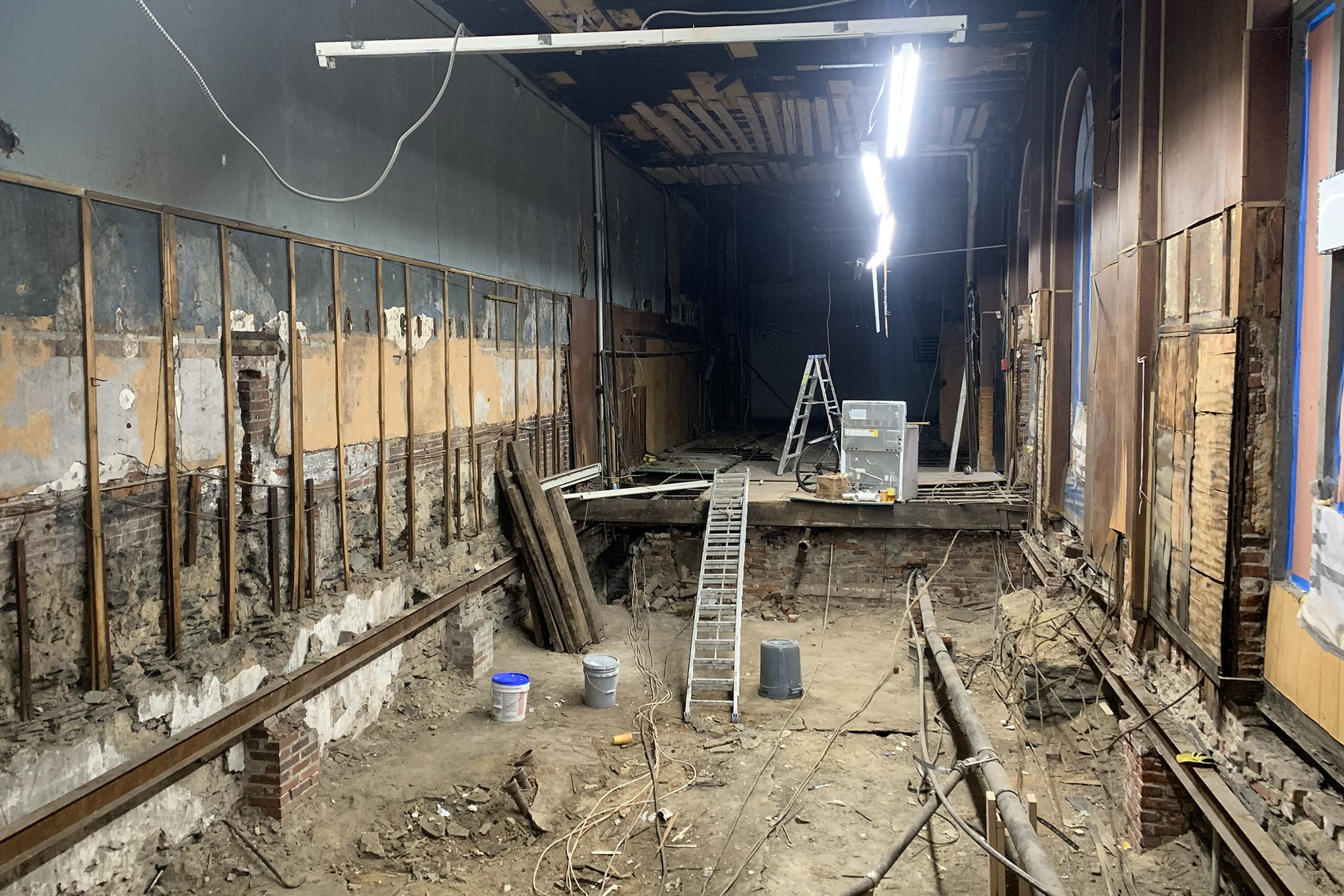
Through decades of various uses and multiple renovations, the interior of the first floor had been altered beyond recognition. Furthermore, the continued use and lack of repairs over the years warranted an entire interior demolition of the first-floor space. This revealed minor structural concerns which would be addressed as part of the renovation. To our surprise, hidden elements of Furness design were also uncovered.
Furness continuously experimented with structure and integrated it seamlessly into his design, in keeping with his fascination with modern technology and scientific advancement. An example of this can be seen in the innovative floor structure at the Dr. Caspar Wister House. US Patent #416,907 “Floor for Buildings” was issued in 1889 with Furness’s name on it, a few years after the completion of the home. Despite floor level changes in previous renovations, this structural system was still present over a century later. Similar to the exterior, the interior had become an amalgamation of various interventions, yet still showed evidence of the original design, even if hidden below layers of subsequent construction. These discoveries reinforced the building’s architectural and historical significance.
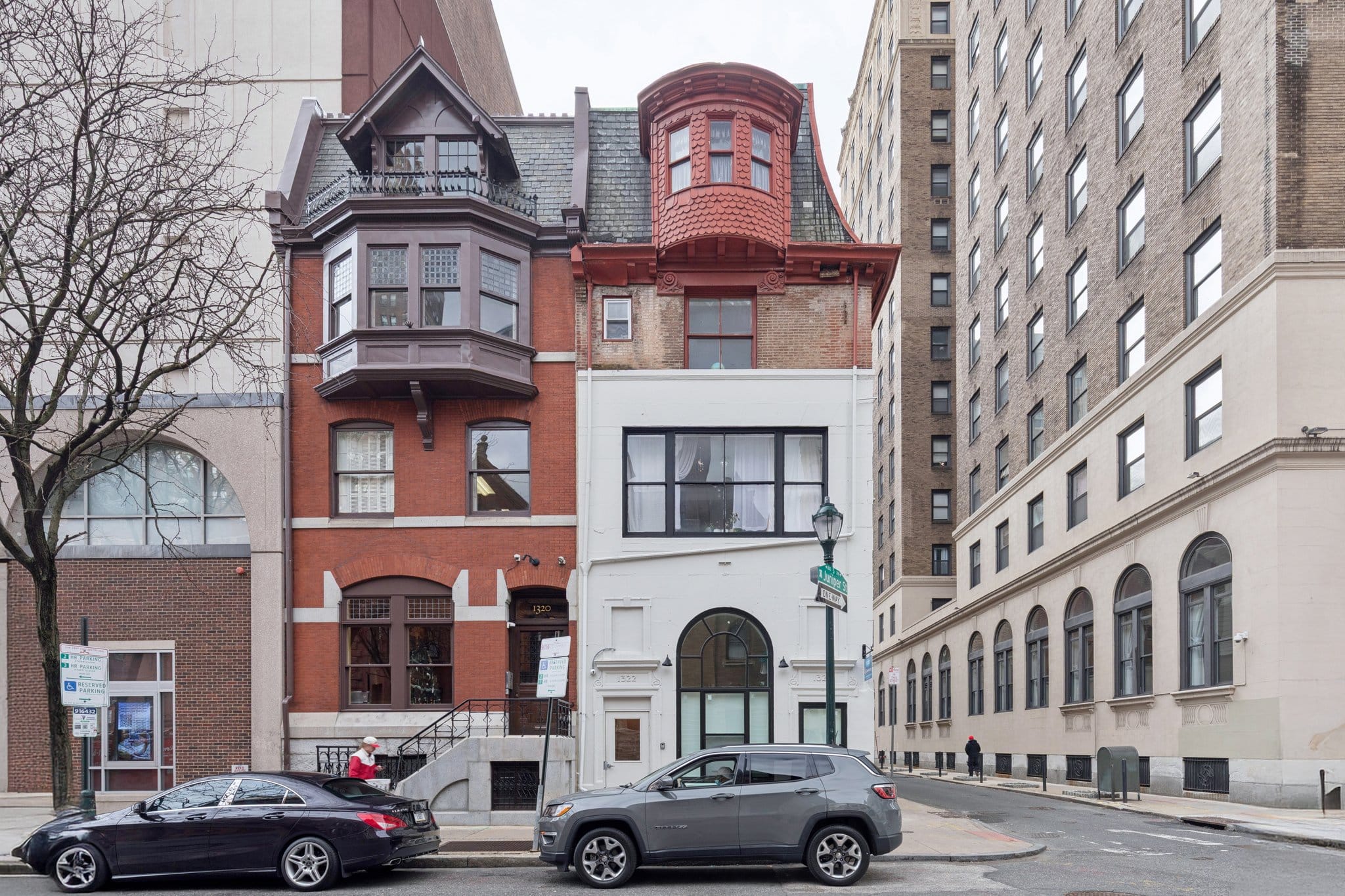
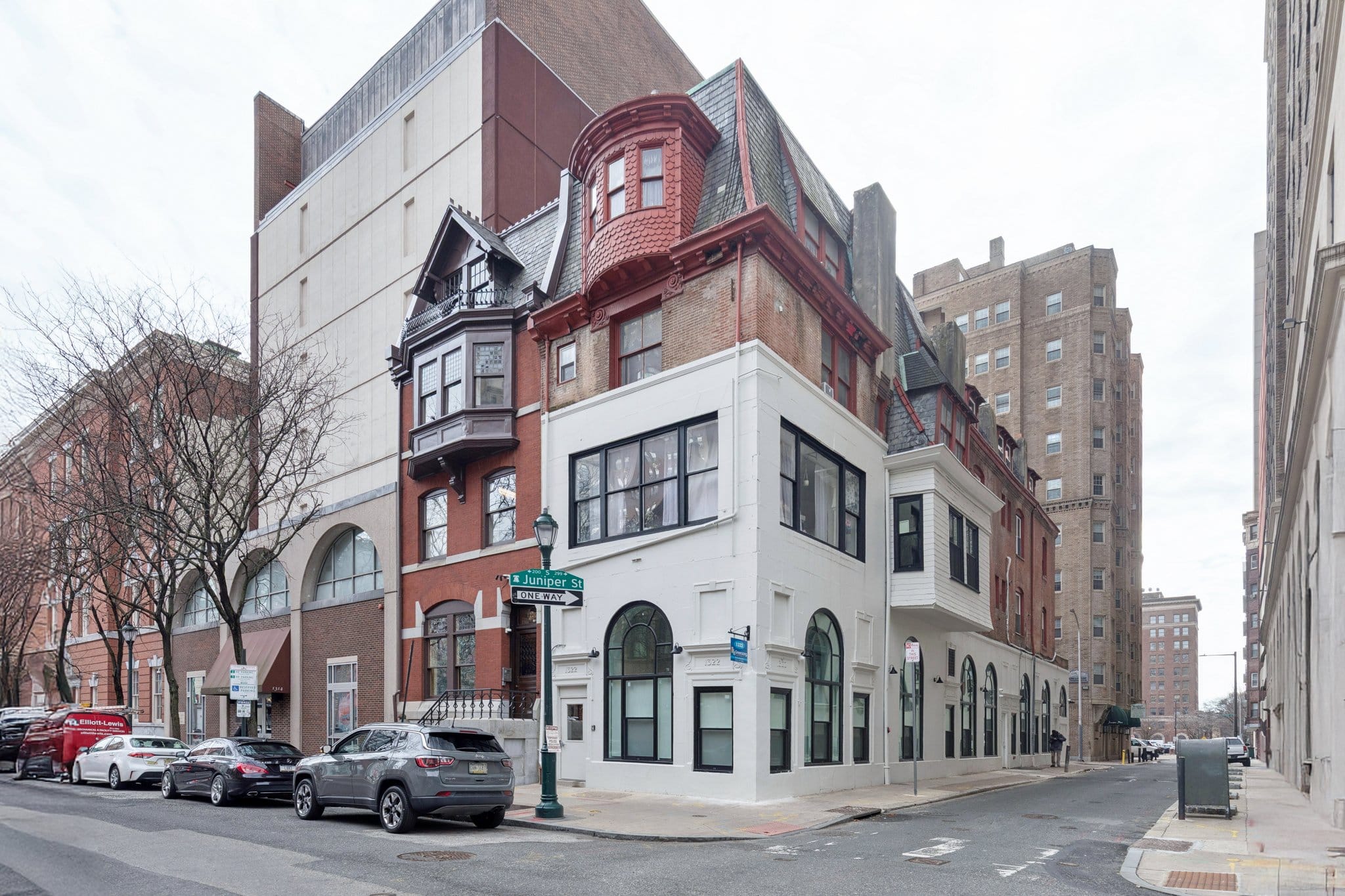
The Transformation
After the closing of the dry cleaning business, the property owner wanted to convert the first floor space into 3 additional residential units. Limited in area but not height, we utilized mezzanines to gain livable space while complying with the allowable building story limitations. This also maximized natural daylight within the units, taking advantage of the large window openings. The result is bright and spacious double-height living areas right in the heart of the city. Although far from the original use as a single-family home, the change of occupancy from commercial to residential is an appropriate nod back to Frank Furness’s vision of city living.
The project balances preservation and adaptation, allowing Furness’s architectural style to reemerge while meeting contemporary needs. By respecting historic exterior language and introducing thoughtful residential interventions, the renovation restores clarity to a once-fragmented building. The result honors the past not through replication, but through a renewed, livable interpretation of Furness’s enduring vision.
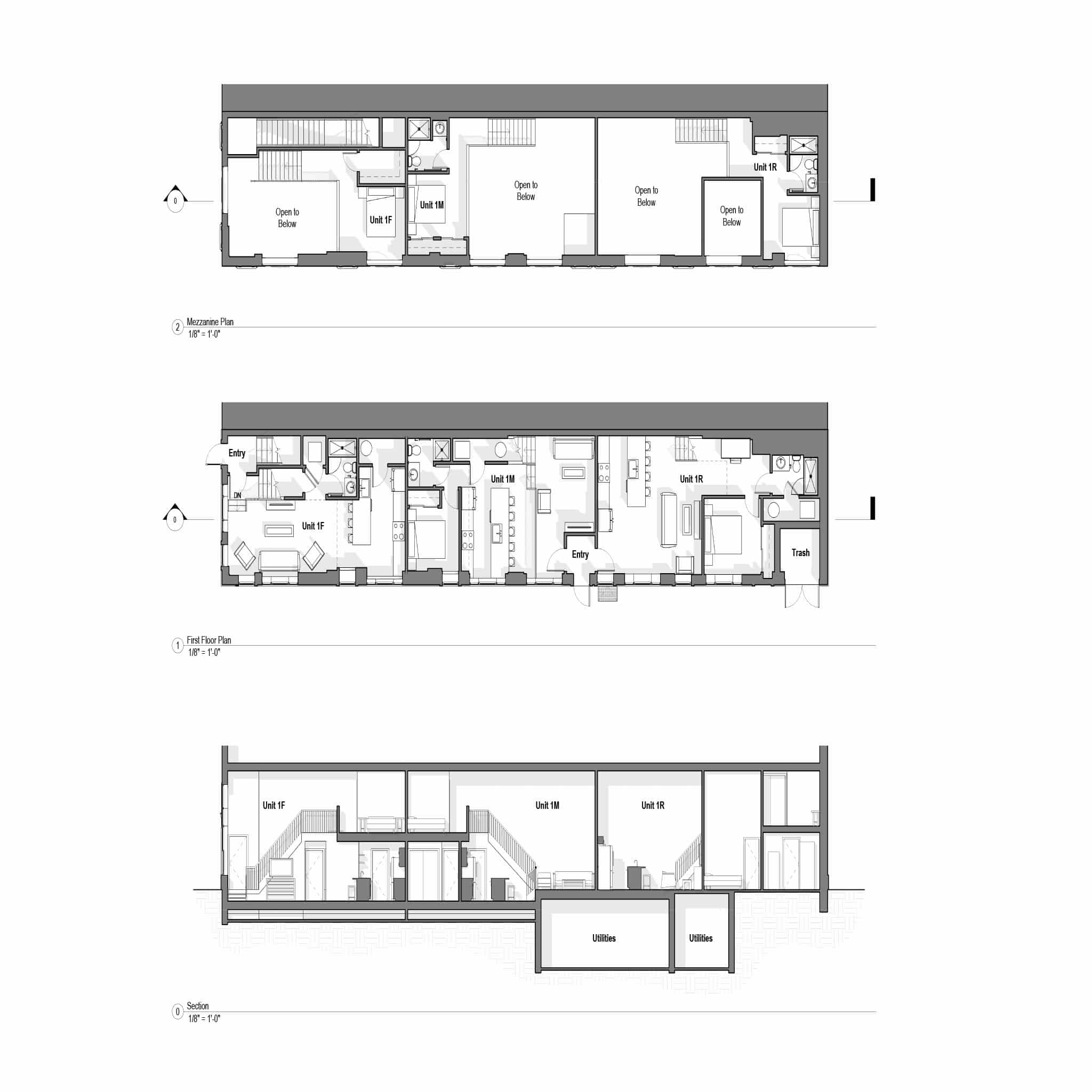
Consists of 3 units, each with a mezzanine space.
Project size: 1,900 sf
Program: adaptive reuse of the first floor of a historic home previously used as a laundromat into 3 apartments. The building is historically listed on the Philadelphia Register
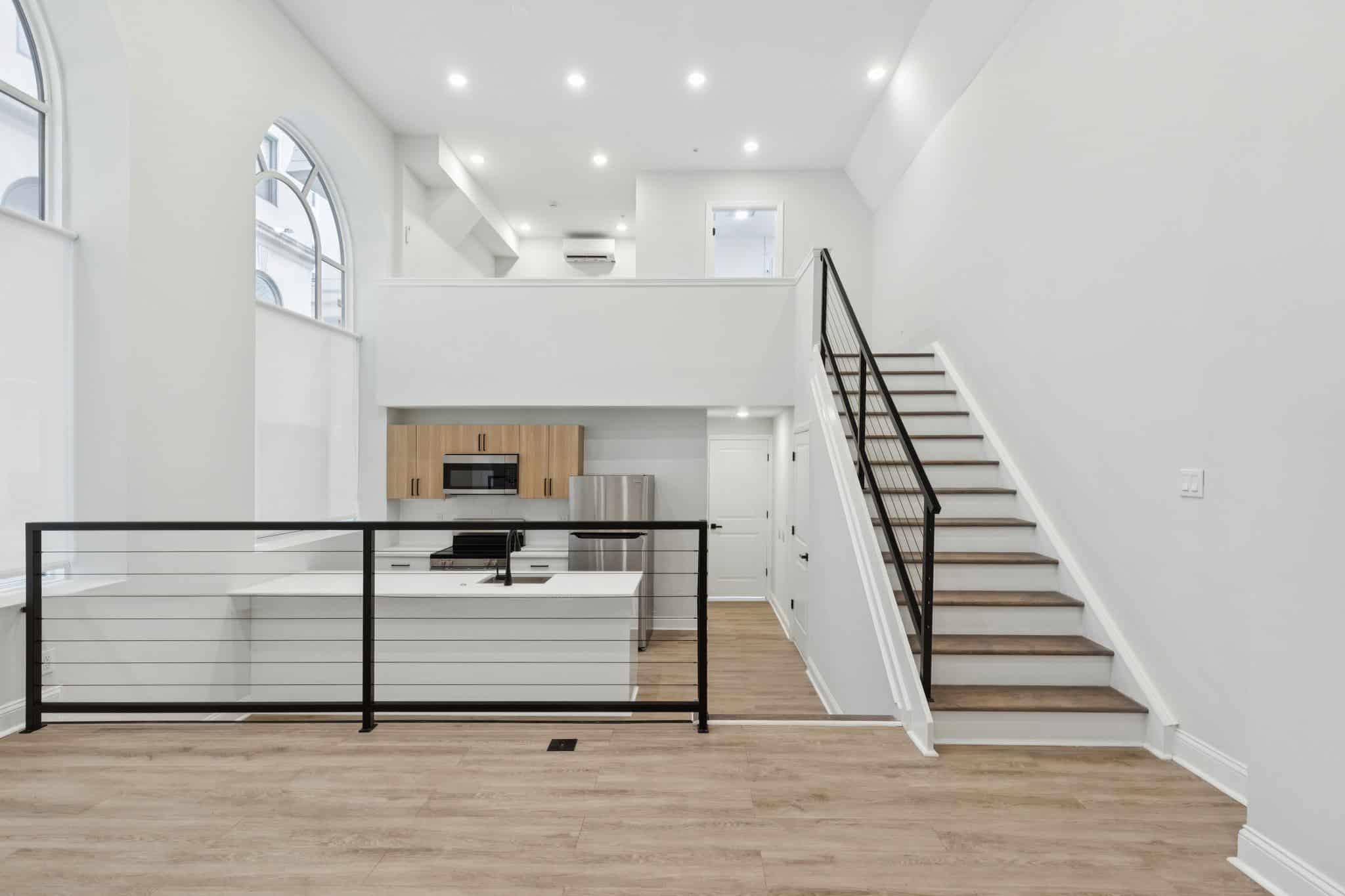
Modern handrails act as a divider between living levels
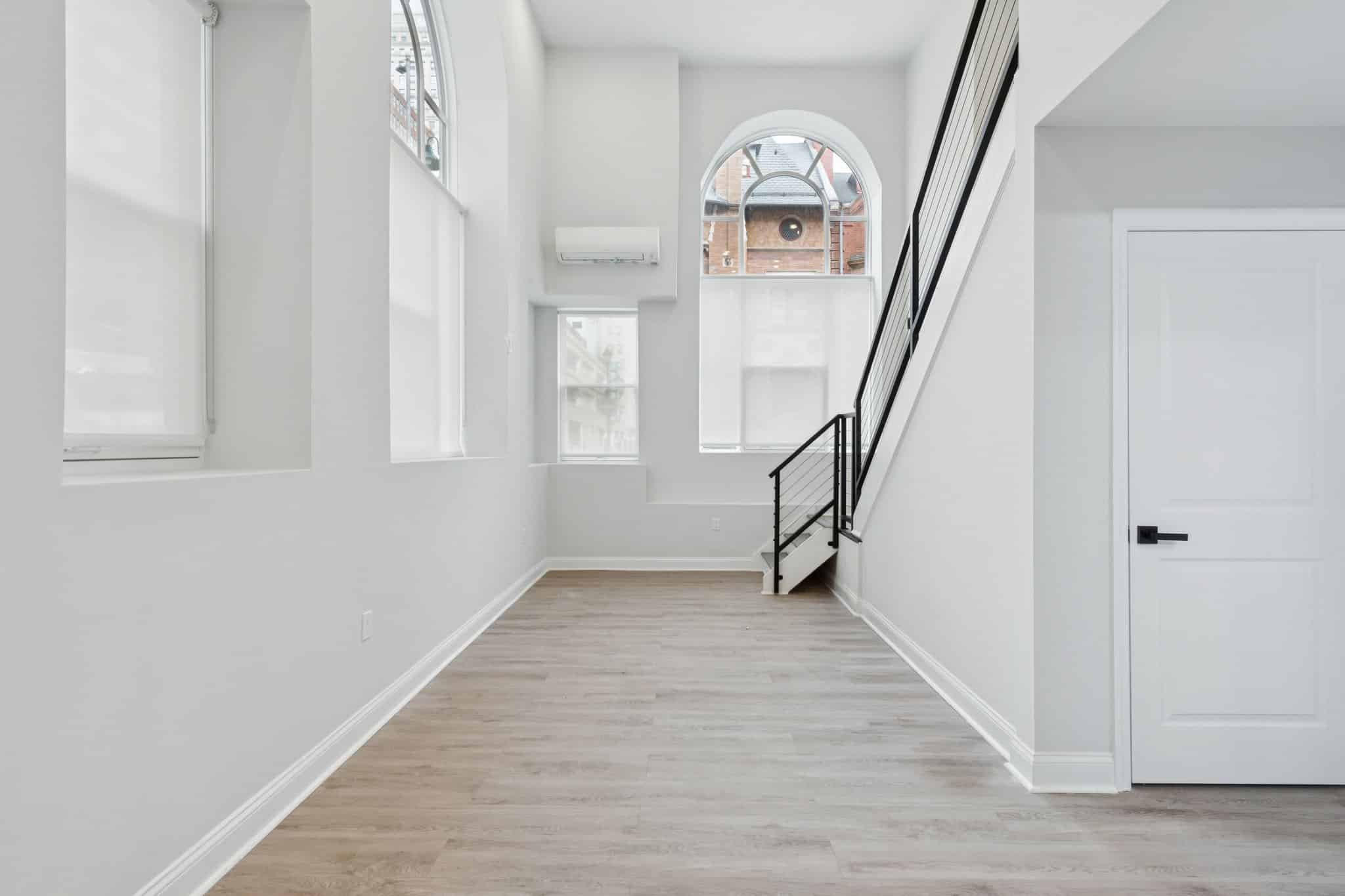
Living spaces celebrate the large windows

Modern two tone kitchens
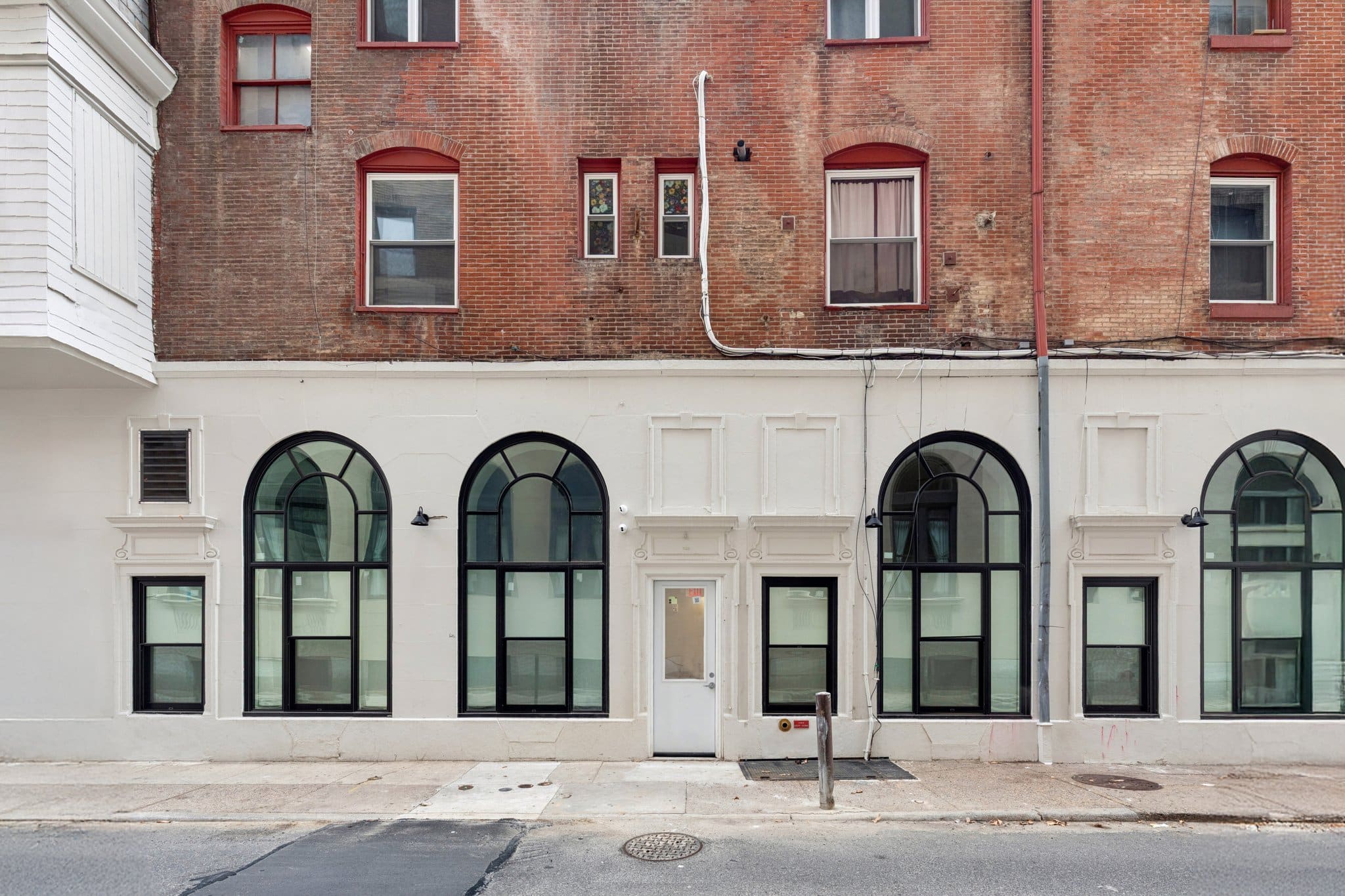
The exterior features a rhythm of window sizes

Existing conditions